Patrick Mettes
How to Change Your MindPatrick Mettes was a fifty-three-year-old television news director whose participation in a New York University cancer trial became, for him and his wife Lisa Callaghan, a turning point in the experience of terminal illness. The psilocybin session did not cure his cancer or erase the fact that he would die. Its significance lay in a change of perspective: Patrick moved from being overwhelmed by the prospect of death toward a renewed commitment to the life and love still available to him, and later met his death without the fear that had once burdened him.
Illness and the Decision to Participate
Patrick’s bile-duct cancer had been diagnosed three years before he joined the trial. Lisa had first noticed that the whites of his eyes had turned yellow. By 2010 the cancer had spread to his lungs, chemotherapy was taking a severe toll, and Patrick was beginning to reckon with the possibility that treatment might not save him. In April that year, he read a front-page New York Times article about renewed medical research into hallucinogens, including a New York University study testing psilocybin for the existential distress of cancer patients. Although he had no prior experience with psychedelics, he promptly decided to volunteer.
Lisa opposed the decision. She feared that joining the study meant Patrick was giving up the fight, and wanted him to keep fighting rather than find what she understood as an easy way out. Patrick called New York University anyway, completed the forms and screening questions, and was accepted. The disagreement captured the uncertainty surrounding the choice: for Lisa, hope meant continuing to resist the disease; for Patrick, entering the trial became a way to address the anxiety and depression that accompanied it.
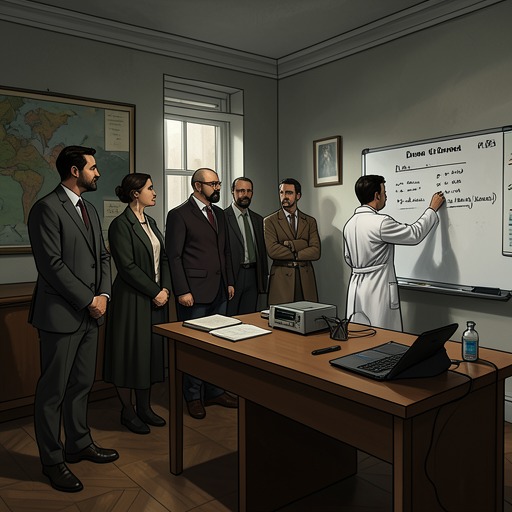
The study paired Patrick with Tony Bossis, a palliative-care psychologist about his age. They quickly formed a rapport. Bossis prepared him through several sessions of talking therapy and explained the structure of the study: Patrick would have two dosing days, one involving a high dose of niacin as an active placebo and the other a capsule containing twenty-five milligrams of psilocybin. During the sessions he would spend most of the day lying on a couch with eyeshades and headphones, accompanied by Bossis and a second guide, Krystallia Kalliontzi. The guides would remain available but speak little. The music playlist ranged from Brian Eno and Philip Glass to Pat Metheny, Ravi Shankar, classical works, and New Age compositions. Patrick was also given flight instructions written by Bill Richards, a guide to approaching the experience rather than fleeing from whatever arose.
The Session and Its Central Images
In January 2011, Lisa had an important work meeting and Patrick traveled alone by subway from their Brooklyn apartment to the treatment room at the New York University dental school on First Avenue and Twenty-fourth Street. The university setting was an improvised home for the trial: Bellevue and the cancer center had wanted distance from research involving psychedelics. At nine in the morning, Bossis and Kalliontzi greeted Patrick and reviewed the plan. He stated his intention: to cope better with the anxiety and depression surrounding his cancer and to work through regret in his life. He placed nearby photographs of himself and Lisa on their wedding day and of their dog, Arlo. After half an hour, the uncertainty about the contents of the pill was resolved; Patrick settled onto the couch, put on his eyeshades and headphones, and began the journey.
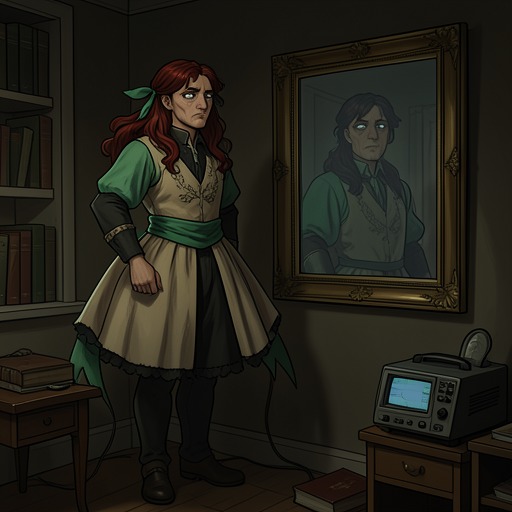
He later compared its opening to a space-shuttle launch: a rough beginning gave way to the serenity of weightlessness. Among the figures he encountered was Ruth, his sister-in-law, who had died of cancer more than twenty years earlier. In Patrick’s account, she guided him through an experience centered on feminine presence, maternal love, and a sense of being born again. He cried as he felt that a mother, despite her shortcomings, could not fail to love her child. The experience’s emotional force came not as an argument about his illness but as a felt assurance of love and care.
As the journey continued, love became its governing idea. Patrick described it as emanating from a single point of light and felt his body trying to vibrate in unity with the cosmos. Music seemed to narrow to one note, C, which he understood as the universe’s vibration and the sum of everything that had ever existed. He also drew an unexpected lesson in simplicity. Politics, food, music, architecture, and television news all seemed overproduced; in his view, they had accumulated too many flourishes when attention should be directed toward love. Derek Jeter appeared in one of these scenes, making a balletic turn toward first base.
Cancer itself seemed, by comparison, a minor imperfection of human life; the more important work, the message suggested, was love. Then Patrick encountered what he called a brief death. He approached a sharp, shining metal edge above an abyss and considered looking over it, aware that going further might mean leaving his body permanently. He was hesitant but not frightened. He told his guides that he was not ready to leave Lisa. The decision to stay made his attachment to her explicit at the moment when the journey had brought him closest to imagining its loss.
The session ended around three in the afternoon. The transition back to ordinary time felt abrupt, and Patrick had a headache. Lisa arrived to take him home and found him tired and sweaty, but eager to tell her what he could. He said he had touched the face of God. The intensity of that report stood beside the ordinary physical aftermath: a long session had ended, his body was depleted, and the meaning of what had happened would take time to articulate.
Making Meaning After the Journey
The trial asked participants to write about their journeys soon after they ended, and Patrick took that task seriously, working through the weekend after an earlier Friday session to put his experience into words. Lisa shared his account and Bossis’s session and follow-up notes with the narrator. Those records make the journey more than a dramatic episode: they show Patrick returning to it in conversation and trying to fit its images into his understanding of illness, death, and daily life.
At a follow-up meeting several weeks later, Patrick described the experience as a window onto an afterlife or a reality beyond the physical body. He spoke of an infinite plane of love and later considered his body and cancer a kind of illusion. These were his interpretations of the session, not a change in his medical condition. Psychologically, however, the notes recorded marked improvement: he meditated regularly, felt more able to live in the present, and said he loved Lisa even more. Two months after the journey, while his cancer continued to progress, Bossis noted that Patrick felt happier than at any other point in his life.
The change was visible in the life they shared. Patrick had entered the trial while weighed down by the possibility of dying; afterward he believed he still had much to do, including love to give and receive. Lisa later described him as more patient and joyful. Their arguments did not disappear, and a disastrous summer apartment renovation in Brooklyn remained a source of strain. But Patrick seemed less consumed by the details and more able to enjoy being with people, eating a sandwich, or walking along the promenade. Lisa came to feel that they had lived a lifetime in a year.
Patrick continued chemotherapy for a time, and Lisa initially persuaded herself that he might not die. She later believed that he understood his prognosis even while his spirits improved. He spent good days walking around the city, trying restaurants for lunch, and telling her about the places he had found; gradually those days became fewer. In March 2012, he told Lisa he wanted to stop chemotherapy. He did not want to die, she understood, but no longer wanted to live in that way. The decision marked a distinction between accepting death and choosing the terms of the remaining life: the journey had not made him indifferent to survival, but it had helped shift his attention toward what that life could still contain.
Death and the Journey’s Aftermath
That fall, Patrick’s lungs began to fail and he was hospitalized at Mount Sinai. He gathered those around him to say goodbye and explain how he wanted to die. Lisa described his death as conscious and remembered the palliative-care room becoming a gathering place for nurses and doctors, drawn to Patrick’s conversation and the love he seemed to offer. When Bossis visited him a week before he died, he too was struck by the serenity of the room. Patrick comforted Lisa. His greatest sadness was leaving her, but he was not afraid.
Lisa left the hospital briefly to shower after her brother urged her to go home. Patrick died shortly before she returned. She sat with him for three hours afterward, experiencing his absence as something that had gradually left the room. She called it a good death and credited both the New York University team and Patrick’s psilocybin journey with helping him reach deep resources of his own. Her account does not present the drug as a cure or as the source of a single guaranteed outcome; it emphasizes the inner resources the experience helped him access.
Patrick lived seventeen months after his session. Across that time, the journey’s consequence was not a simple triumph over fear but a reorientation that endured alongside pain, treatment, disagreement, and declining health. His decision not to leap into the imagined abyss because he was not ready to leave Lisa became continuous with the way he spent his remaining months: accepting that he was dying while staying engaged with the people and ordinary pleasures of life. His story gives the cancer trial its human measure. The lasting change was not that death disappeared, but that it ceased to occupy the whole field of view.